
Producer deep dive
Everything you need to know about Gaja wines
Angelo Gaja put Barbaresco on the map, declassified his best wines for 16 years, then watched their prices double. The full story — the vineyard breakdown and 15 years of price data.
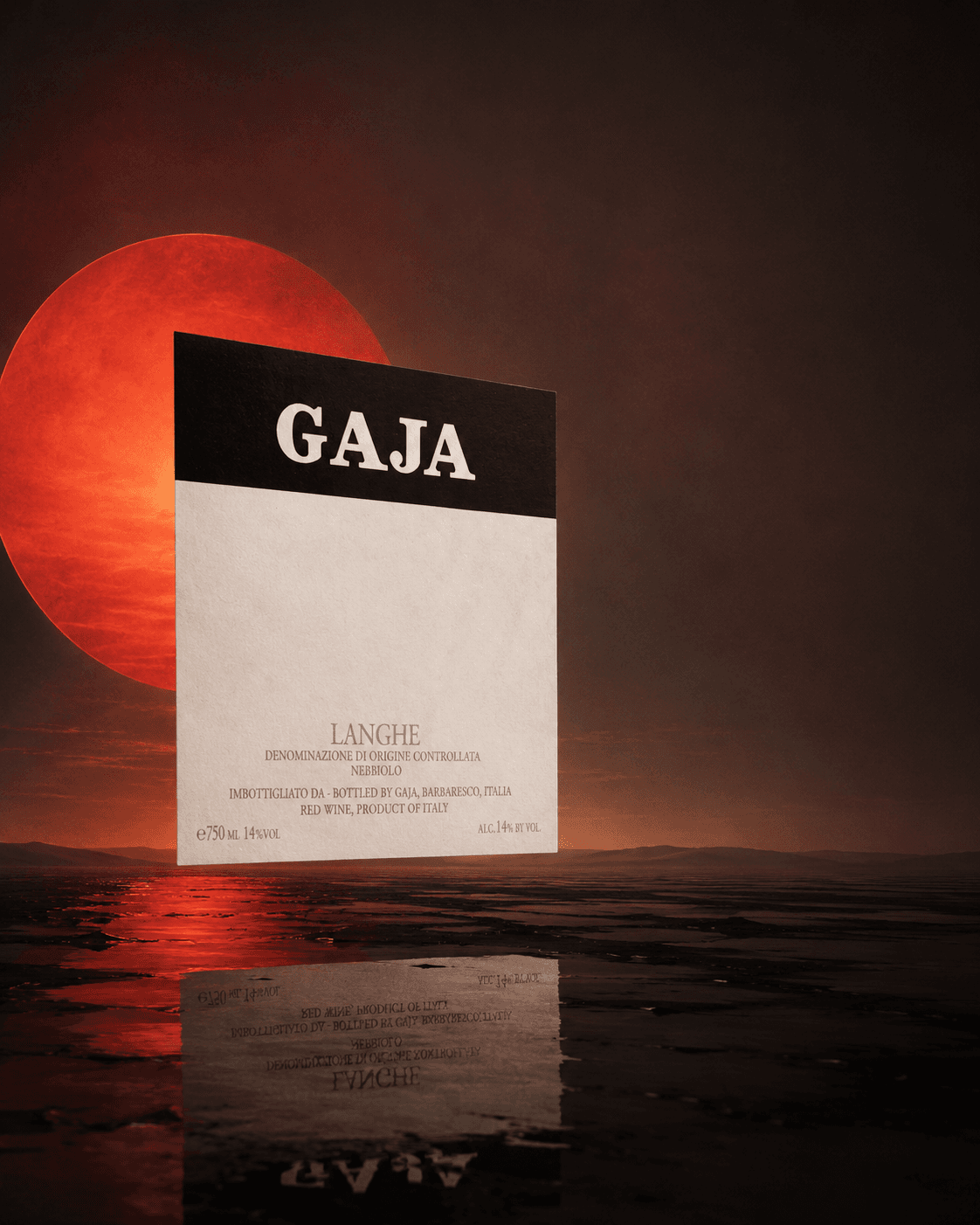
Gaja is one of those names that comes up whenever anyone talks about Italian wine at the highest level. Angelo Gaja, the man who ran the estate for over five decades, is often called the person who put Barbaresco on the map. That is not an exaggeration. Before him, Barbaresco was considered a lesser cousin of Barolo. After him, it was spoken of in the same breath as Château Lafite Rothschild and Krug.
I recently put together an Instagram post breaking down Gaja's wines, their history, and how their prices have moved over the past 15 years. This is the longer version. If you want the quick summary, the carousel is on our Instagram. If you want the full picture, including the declassification story, the vineyard breakdown, and what the price data actually shows, keep reading.
In short
- The Gaja estate is based in Barbaresco and Barolo, Piedmont, founded in 1859 and now run by the fifth generation.
- From 1996 to 2012, Angelo Gaja sold his top single-vineyard wines as Langhe Nebbiolo, leaving “Barbaresco” and “Barolo” off the label.
- Daughter Gaia Gaja restored the “Barbaresco” name starting with the 2013 vintage.
- The range stays small: the Barbaresco estate blend, single vineyards Sorì San Lorenzo, Sorì Tildìn and Costa Russi, and the Barolos Sperss and Conteisa.
- Average sale prices have roughly doubled since 2011, climbing sharpest from around 2018.
❦
01Why is Gaja the most respected name in Barbaresco and Barolo?
The Gaja estate was founded in 1859 in the village of Barbaresco, in Piedmont. Five generations of the family have run it since. But it was Angelo Gaja, who took over from his father in 1961, who transformed the business from a respected local producer into one of the most famous wineries in the world.
Angelo was a moderniser in a region that was deeply traditional. He introduced temperature-controlled fermentation, adopted French barriques for ageing (controversial at the time in Piedmont), and started bottling wines from single vineyards when most producers were still blending everything together. His first single-vineyard Barbaresco, Sorì San Lorenzo, debuted with the 1967 vintage. Sorì Tildìn followed in 1970, and Costa Russi in 1978.
These three wines, all from vineyards within the Barbaresco commune, became some of the most celebrated Nebbiolo wines in the world. They still are. Today Sorì San Lorenzo, Sorì Tildìn, and Costa Russi each sell for between €450 and €530 on the secondary market.
But the Gaja story is not just about making great wine. It is about a willingness to fight with the system when the system gets in the way.
❦
02Why did Gaja drop “Barbaresco” from his best bottles for 16 years?
In 1996, Angelo Gaja did something that shocked the Italian wine world. He voluntarily declassified his three single-vineyard wines from Barbaresco DOCG (the highest classification) down to Langhe Nebbiolo DOC, a far less prestigious designation.
The reason was Barbera. Angelo believed his single-vineyard wines would benefit from a small addition of Barbera grapes, around 5 to 6%, which would add freshness and acidity to the Nebbiolo. The problem was that Barbaresco DOCG regulations require 100% Nebbiolo. So he had a choice: follow the rules and make the wine the way the committee wanted, or make the wine the way he wanted and accept the downgrade.
The finest wines ever made in Italy.— Wine Spectator, on the 1985 Gaja Barbaresco
For 16 years, from 1996 to 2012, the labels on Gaja's Sorì San Lorenzo, Sorì Tildìn, Costa Russi, and even his Barolo Sperss read “Langhe Nebbiolo” instead of Barbaresco or Barolo. It was a deliberate act of rebellion from a producer who believed that quality should not be dictated by bureaucratic classifications. If you look at a bottle of Gaja Sperss from the 1999 vintage, for example, the label says Langhe, not Barolo. The wine inside is still made from the same Nebbiolo grapes, from the same Serralunga vineyard. Only the legal designation changed.
The consequence was that Gaja's one remaining wine still labelled “Barbaresco” (the estate blend, sourced from multiple vineyards) suddenly became the flagship of the appellation. Angelo later said this was part of his reasoning: by removing the single-vineyard wines from the Barbaresco DOCG, his blended Barbaresco would get the attention it deserved rather than being overshadowed by the cru bottlings.
❦
03How did Gaia Gaja bring “Barbaresco” back?
The declassification era ended with the 2013 vintage. Gaia Gaja, Angelo's daughter and the fifth generation of the family, convinced her father to return the single-vineyard wines to 100% Nebbiolo and reclassify them under Barbaresco DOCG and Barolo DOCG.
The decision was widely covered in the wine press. Decanter, Wine Spectator, and the Dutch wine magazine Perswijn all reported on the change. For collectors and merchants, it mattered because it restored the appellation name to some of the most expensive Italian wines on the market.
In practice, the wines from 2013 onwards are pure Nebbiolo again. Whether they are better without the Barbera is a matter of taste. Angelo clearly thought the Barbera made a difference. His daughter thought the classification mattered more. Both had a point.
If you are buying Gaja wines on the secondary market, the declassification history is worth understanding. A bottle labelled Langhe Nebbiolo from a vintage between 1996 and 2012 is not a lesser wine. It is the same single-vineyard wine that now carries the Barbaresco or Barolo name. One thing worth noting: those Langhe Nebbiolo-era bottles also include Angelo's small Barbera addition — around 5 percent — which was quietly dropped when the wines returned to their appellations in 2013.
❦
04What wines does Gaja actually make?
Gaja's portfolio is relatively small and focused. The wines fall into two groups: Barbaresco and Barolo.
On the Barbaresco side, there is the estate blend, simply called “Barbaresco,” sourced from vineyards across the Barbaresco and Treiso communes. It is the entry point to the Gaja range and currently averages around €259 per bottle on Wine-Searcher. Then there are the three single-vineyard Barbarescos: Costa Russi (averaging €459), Sorì Tildìn (€498), and Sorì San Lorenzo (€531). All three come from vineyards within the Barbaresco commune, all face south or southwest, and all sit at elevations between 230 and 260 metres.
On the Barolo side, there are two wines. Sperss comes from the Serralunga d'Alba commune, one of the most powerful and structured parts of Barolo. The name means “nostalgia” in Piedmontese dialect, a reference to Angelo's desire to return to making Barolo after years of buying grapes from other producers. The vineyard sits at around 370 metres elevation with a south-southwest exposure. Sperss currently averages €354. Conteisa, the second Barolo, comes from La Morra and averages €318.
Gaja's range spans both villages, with blends and single-vineyard crus
| Vineyard | Area | Blend / SVY | Slope aspect | Elevation | Avg sales price |
|---|---|---|---|---|---|
| Barbaresco | |||||
| Barbaresco | Barb. & Treiso | Blend | Mixed | ~200–300m | €259 |
| Costa Russi | Barbaresco | Single vineyard | Southwest | ~230m | €459 |
| Sorì Tildìn | Barbaresco | Single vineyard | South | ~260m | €498 |
| Sorì San Lorenzo | Barbaresco | Single vineyard | South | ~250m | €531 |
| Barolo | |||||
| Sperss | Serralunga | Single vineyard | South-SW | ~370m | €354 |
| Conteisa | La Morra | Single vineyard | Southeast–east | N/A | €318 |
Average sales prices from Wine-Searcher, consulted 7 June 2026.
The single-vineyard wines are where Gaja's reputation lives. But the blended Barbaresco should not be overlooked. At roughly half the price of the single-vineyard bottlings, it offers a genuine introduction to the Gaja style.
❦
05How much have Gaja’s prices risen since 2011?
This is where the data gets interesting. I pulled average sales prices for five Gaja wines from Wine-Searcher, going back to 2011, and charted them.
The pattern is remarkably consistent across the range. Every wine has roughly doubled in price over 15 years. That works out to approximately 5% annual growth in nominal terms, or around 2.5% after adjusting for inflation.
The single-vineyard Barbarescos (Sorì San Lorenzo, Sorì Tildìn, Costa Russi) have appreciated the most in absolute euro terms, moving from roughly €250 to €275 per bottle in 2011 to between €459 and €531 today. Sperss followed a similar trajectory, rising from roughly €170 to €354. The blended Barbaresco grew at a comparable rate in percentage terms, from around €130 to €259.
What stands out in the chart is the acceleration from around 2018 onwards, which aligns with the broader fine wine rally covered in our State of Fine Wine report. Unlike some regions that gave back most of their pandemic-era gains, Gaja's prices have held relatively steady through the correction. This is consistent with the broader finding that Italian fine wine has been the most resilient segment of the market over the past two years.
Whether this makes Gaja a good “investment” depends on how you define the word. If you are buying to drink, the value proposition is clear: these are some of the most consistently excellent Nebbiolo wines made anywhere, from vineyards that have been producing great wine for over 50 years. If you are buying to hold, the long-term price trend has been steadily upward with relatively low volatility compared to Burgundy or Bordeaux.
❦
06What should you know before buying Gaja?
A few practical points for anyone considering a bottle.
The blended Barbaresco is the best entry point. At around €259 it is expensive by most standards, but within the Gaja range it represents the strongest quality-to-price ratio. It is also produced in larger quantities than the single-vineyard wines, which makes it easier to find on the secondary market.
Sperss is arguably the most interesting wine in the range for value. At €354 it is cheaper than all three single-vineyard Barbarescos, and it comes from Serralunga, which produces some of the most structured and long-lived Nebbiolo in all of Piedmont. Older vintages of Sperss in particular can be extraordinary.
For the single-vineyard Barbarescos, vintage matters enormously. 2016, 2019, and 2020 are all excellent recent years for Barbaresco. If you find older vintages from the Langhe Nebbiolo period (1996 to 2012), do not let the label put you off. The wine inside is the same quality it always was.
We currently stock Gaja Sperss in our collection.

❦
Wine-Searcher price data consulted 07/06/2026. Prices shown are average European retail, per bottle. Historical background sourced from Decanter, Wine-Searcher, and the Gaja estate.
Amsterdam Vintage Wine sources vintage wines from private cellars and auction houses across Europe. Browse our collection at amsterdamvintagewine.com.