
Producer deep dive
Pierre-Yves Colin-Morey and the rise of Saint-Aubin
Pricing analysis of the modern cult producer from Burgundy.
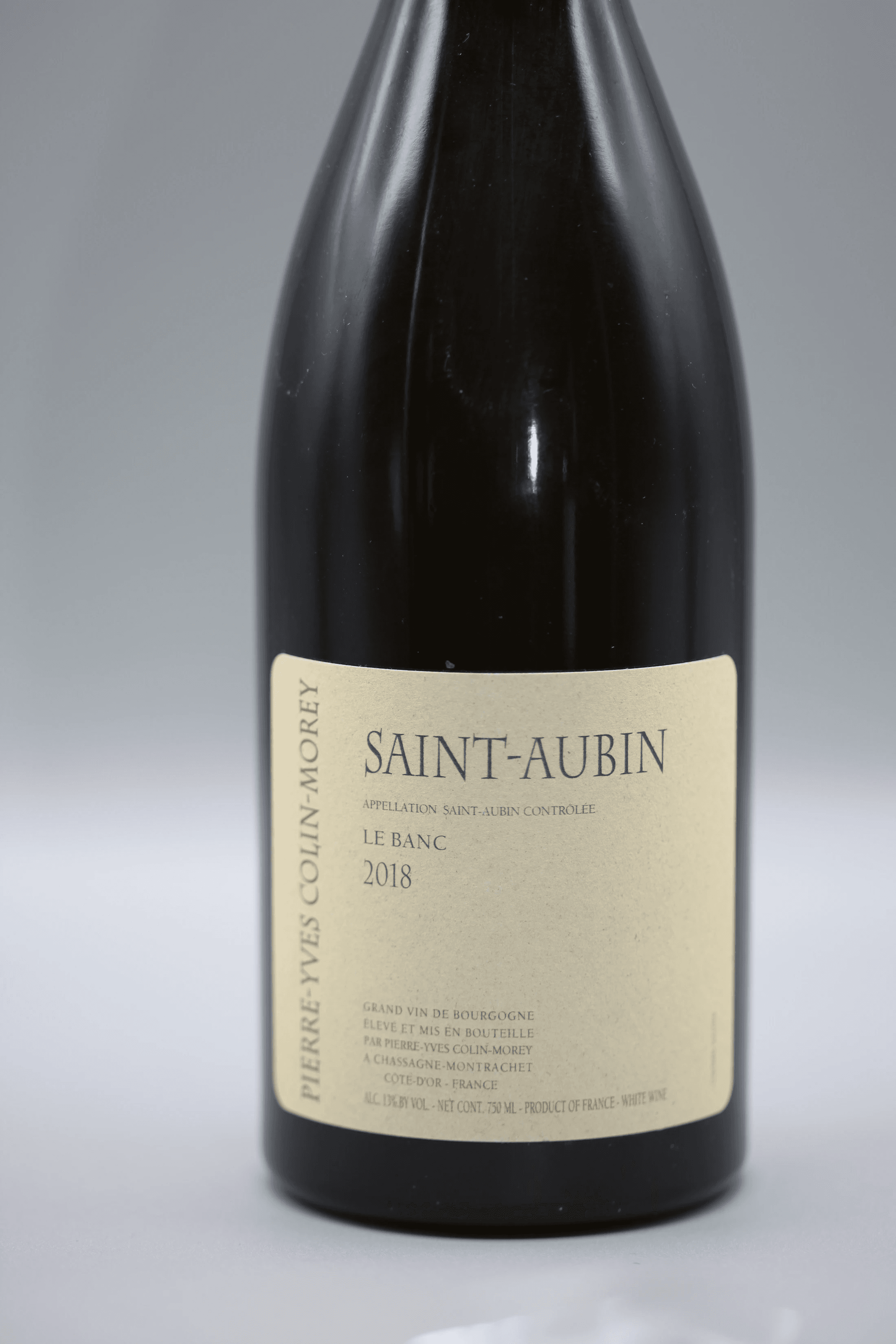
A bottle of Montrachet from Pierre-Yves Colin-Morey (PYCM) runs to about 3,500 euros. His Saint-Aubin premier cru, is under 200. I stock both. The one I actually pull on a weeknight is not the Montrachet.
Twenty years ago that sentence would have made no sense. Saint-Aubin was the village you drove through on the way to somewhere with a famous name. PYCM was a man who had just walked out of his father's cellar. Today he sits in the same conversation as Leflaive and Roulot, and the appellation he grew up in has become the answer to a question serious drinkers keep asking: is there any value left in white Burgundy?
Not much, is the honest answer. But there is Saint-Aubin, and there is this producer.
In short
- Pierre-Yves Colin-Morey left his family's Saint-Aubin domaine in 2005 to build his own.
- The wines are built to resist premature oxidation — no lees stirring, long ageing, and extra-long corks sealed with wax.
- Saint-Aubin, once an overlooked neighbour of Puligny and Chassagne, is now taken seriously.
- Most of the pleasure of grand-cru white Burgundy comes at a fraction of the price.
- Burgundy has cooled since 2022, so prices can move both ways.
❦
01Who is Pierre-Yves Colin-Morey?
Pierre-Yves Colin is Marc Colin's eldest son. He made the wines at the family domaine in Saint-Aubin from 1994 to 2005, which is a long apprenticeship to serve in your own back garden. In 2001 he and his wife Caroline Morey, whose father Jean-Marc made wine in Chassagne, quietly started buying grapes from growers they trusted and vinifying on the side. After the 2005 harvest he left for good, took roughly six hectares of inherited vines with him, and from 2006 the bottles carried his own name.
The domaine now runs to about thirteen hectares, some owned and some bought in as fruit, scattered across the good white addresses of the Côte de Beaune: Saint-Aubin, Chassagne, Puligny, Meursault, up to Corton-Charlemagne and a whisker of the Montrachet grand crus. Nine bottles in ten are Chardonnay. Where he buys grapes rather than growing them he supplies the barrels himself and keeps only the wines that clear his bar, which tells you most of what you need to know about how he operates. His sons Mathis and Clément have joined him. Caroline now makes her own wines under her own label in the same building, which must make for interesting dinners.
❦
02The style of PYCM
Every recognisable style is an answer to something, and PYCM's is an answer to fear. From the mid-1990s white Burgundy was hit by premature oxidation: bottles going deep gold and tasting a decade older than they were, for reasons nobody has fully pinned down even now. The grandest cellars were hit as hard as anyone.
So he built his cellar around not letting it happen to him. He stopped stirring the lees, the trick that adds breadth but also feeds the wine to oxygen. He stopped warming the cellar to push the malolactic along. He ages the wines long, up to eighteen months, in fat 350-litre barrels instead of the standard Burgundian cask, with barely any new oak, so what you taste is stone and citrus rather than wood. The grapes go into the press whole and hard. Wild yeasts only. No filtration.
Then the part you can spot across a shop floor. Every bottle above basic Bourgogne gets an extra-long, extra-wide untreated cork and a coin of wax on top. Belt and braces against air. The wax is the tell. What is under it is consistent to the point of being a signature: crushed stone, a lick of smoke, salt, weight without heaviness, and the spine to sit in a cellar for ten years and come out better. Reduction, kept on a short lead. It is why people trust the wines to keep.
❦
03PYCM and Saint-Aubin
Saint-Aubin is easy to miss, which was the whole problem. It hides in a side valley one ridge back from the golden slope. Walk west over the hill from Chevalier-Montrachet, grand cru, and you come down the far side into Saint-Aubin's En Remilly, on the same seam of marl. The vineyards are higher and cooler, 300 to 400 metres up, and for most of the twentieth century that was simply a handicap: the grapes fought to ripen, and the reds were thin.
A few things turned its luck. Growers replanted the Puligny-facing slopes in the 1980s and the fruit was too good to keep ignoring. As Puligny, Chassagne and Meursault priced themselves into the stratosphere, Saint-Aubin's growers pulled up the Pinot and the Aligoté and planted Chardonnay in earnest. The paperwork helped: the village got its premier crus in 1977, ahead of its grander neighbours, and today nearly three-quarters of it carries premier cru status. And then the climate, after a century as the enemy, switched sides. Cool, late-ripening slopes are exactly what you want once the buying world decides it is bored of fat wine and wants tension instead.
The critics arrived last, as they tend to. By 2016 Jancis Robinson was writing that Saint-Aubin, long filed under "not as good as Meursault," belonged close to the same class. Rajat Parr calls it the insider's white Burgundy, which is the kind of thing that stops being true the moment enough insiders say it out loud. Colin-Morey sits at the centre of the re-rating, alongside Hubert Lamy. His Saint-Aubins now cost real money. Set against what everyone charges one village over, they are still a steal.
❦
04Price analysis of PYCM
The third chart builds on the second chart as it measures every PYCM cuvée against its own neighbourhood benchmark: his Saint-Aubin against Saint-Aubin as a whole (e.g., his Meursault against Meursault). 1x means he merely kept up. Above 1x means the wine performed above the benchmark.
By that count his Meursault Perrières is the clear winner, returning close to six times what the broad Meursault market did. His grand cru Bâtard-Montrachet, barely beat its own appellation. His two Saint-Aubins land in between, at roughly twice their local market.
However, a wine merchant who tells you something only ever goes up is a wine merchant you should stop reading. Burgundy ran hot into 2022 and has been cooling since, which I got into in the state of fine wine. Colin-Morey's premier crus, En Remilly and Les Champlots among them, have come off their 2022 peak. If you bought at the top, you are underwater today. It is also why the premier cru shelf is the interesting one right now: the froth is off and the wines are still the wines. All in all, now is a great time to buy PYCM.
Saint-Aubin will never be Montrachet. It lacks the last inch of depth, and on a great day next door you can taste what the extra 3,000 euros is buying. What it gives you instead is the same hillside, most of the same pleasure, and a cork you can pull in five years rather than twenty-five. For anyone getting to know white Burgundy without a private bank behind them, I don't know a more useful bottle. PYCM is where I would start, because he is the one who stopped being afraid of the thing that ruins these wines.
❦
The return multiples above are indicative: Wine-Searcher monthly averages, ex-tax, rounded, and still being verified. Actual returns vary by vintage, condition and merchant.
Amsterdam Vintage Wine sources vintage wines from private cellars and auction houses across Europe.
❦
In our cellar now


Stock is limited and moves quickly. See the full Colin-Morey collection →